


This week I sat with a lender to explore how AI could support credit decision-making. What they showed me was genuinely impressive. They had taken roughly sixty pages of lending policy out of a three-hundred-page document and used it as the intelligence layer for an internal model. It summarized policy in seconds. It drafted a nearly complete commitment letter. It assessed a live deal against the lender’s guidelines.
Then they ran a previously approved file through it, and the model flagged the deal as an exception.
There was just one problem: it wasn’t an exception, and everyone in the room knew it. The file was structured differently from what the written policy anticipated, but an experienced underwriter understood immediately why it should be approved and how it was likely to perform. The model had read the policy. It had never met the business.
Nobody in that room questioned the intelligence. The intelligence was fine. The intelligence was spectacular. What it lacked was the institutional context that had never been written down because until now, it had lived entirely inside someone’s head.
That gap has a name now. Everyone found it at the same time: CONTEXT.
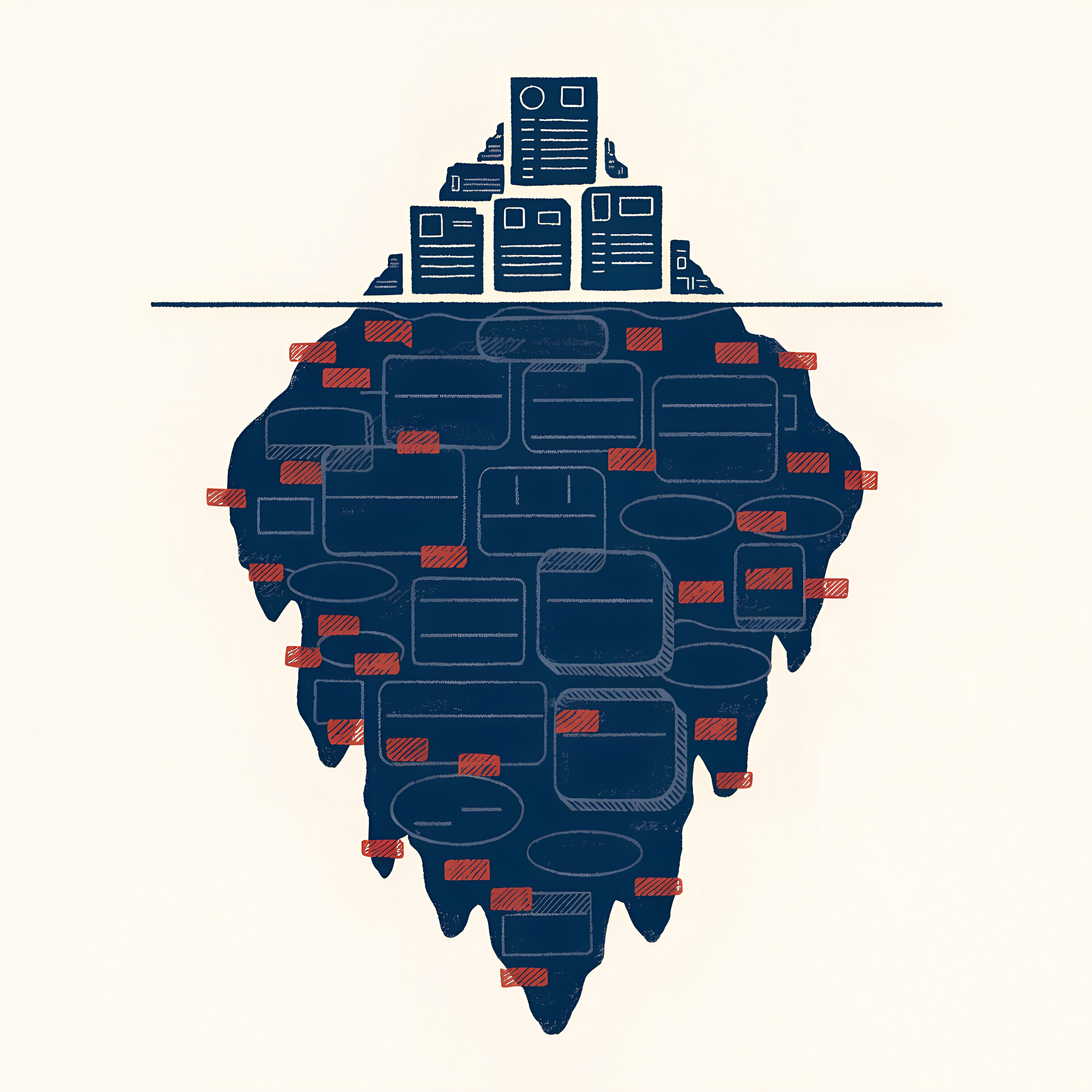
Everyone discovered context at once
Andrej Karpathy, founding member of OpenAI kicked off the renaming: “+1 for ‘context engineering’ over ‘prompt engineering,’” he wrote, calling it “the delicate art and science of filling the context window with just the right information for the next step.” Shopify CEO Tobi Lütke agreed: “the art of providing all the context for the task to be plausibly solvable by the LLM.” And this week Reuven Gorsht, my co-host on The Signal podcast, published the strategic version of the argument, and it’s the best one yet: your moat isn’t intelligence, it’s context. His line is the one worth taping to the wall: “You can rent intelligence by the token. You can’t rent context at any price.”
They’re all right. And almost all of the commentary that’s followed makes the same mistake.
It treats context as a technique. Something you do to a model. A bigger window, a better retrieval pipeline, a cleverer assembly of tokens at query time. That’s the engineer’s view, and for engineers it’s the correct one.
But if you run a bank, a lender, or an insurer, the technique is not your problem. Your problem is that nobody has told you where your context actually is. Because it isn’t in a window. It’s an asset you already own, and you’ve been accumulating it for decades.
It lives in exactly three places.
First, the reframe: the model is your core banking
Before the three places, one mental swap that makes everything else fall into line.
Think about your core banking system. Or your LOS, or your policy admin platform. There was a time when that choice was the strategic decision, the thing boards debated and careers were staked on. Today it’s plumbing. Mission-critical plumbing, stable and load-bearing and absolutely necessary. And nobody cares how it runs. They care that it does. Every ounce of differentiation your institution has lives in the layers built on top of it.
Model intelligence just made the same journey. It took core banking forty years to become invisible infrastructure. It took frontier models about three. The intelligence is stunning, the intelligence is table stakes, and the intelligence is available to your smallest competitor for the same monthly rate you pay. An advantage you have to re-buy every quarter isn’t an advantage. It’s a subscription.
So the question stops being which model? the same way it stopped being which core? The question becomes what you build on top. And what you build on top is made of context.
Here’s where yours is.
Place one: your data
Not the data in your data warehouse. That’s the easy part, and it’s the smallest part.
I mean the company’s actual knowledge. The email discussions where your head of credit explained, better than any policy document ever has, why you don’t touch a certain asset class. The SharePoint drive with nine hundred SOPs, six of which are load-bearing. The closing notes. The exception memos. The onboarding deck someone made in 2019 that still explains your niche better than your website does. Industry estimates put roughly 80% of enterprise data in this unstructured pile, and in a financial institution I’d bet the real knowledge skews higher than that.
The philosopher Michael Polanyi had a phrase for the deeper layer underneath even that: “We can know more than we can tell.” He called it tacit knowledge. Your institution is drowning in it. The underwriter who can feel a bad file in the first ninety seconds. The service rep who knows which customers mean it when they threaten to leave. None of it was ever written down anywhere, because until about eighteen months ago, nothing could read it anyway.
That’s the first job of your context layer: making what the institution knows reachable by the systems doing the work. Not a chatbot bolted onto a document dump. A deliberate answer to the question: where does our knowledge actually sit, and what can see it?
Place two: your embedded workflows
The second place your context lives is in motion.
Every institution has two versions of every process. The documented version, the one in the SOP with the flowchart. And the actual version, the one with the workaround for the system that’s been “being replaced” for four years, the unwritten rule about which exceptions go to which person, the step everyone does out of order because the order was wrong to begin with. The documented version is what a model can read. The lived version is what actually drives your business forward.
I’ve written before about the Integration Tax, about ops teams holding the stack together with their bare hands. This is the same territory from a different angle: all of that scar tissue, every workaround and escalation path and sequence your people carry in their heads, is context. It’s the difference between an agent that can process a loan and an agent that can process your loans. A generic model dropped into your operation knows the industry-average workflow, which is to say it knows nobody’s workflow.
The institutions getting real results from AI right now are not the ones with the smartest models. They’re the ones that did the unglamorous work of making their real processes explicit enough for a machine to run them.
Place three: your trust
The third place is the one that doesn’t feel like context at all, which is exactly why it’s the most valuable.
Your relationships. The broker who sends you the file first, before your competitors ever see it, because of how you handled a mess in 2021. The customer who renews without shopping the market. The team that ships because they trust the direction. The regulator who picks up your call. This is why people come back to you, and none of it is stored anywhere except in the accumulated history between your institution and the people around it.
You cannot scrape trust. You cannot fine-tune on it. A competitor could steal your entire document drive and copy your workflows step for step, and they still couldn’t take this layer, because it doesn’t live in your systems. It lives in the pattern of your conduct over time.
But here’s what most institutions miss: trust still produces data, and almost nobody treats it that way. Every renewal, every referral, every escalation that got resolved and turned a furious customer into a loyal one that history is context your AI should have. The relationship itself can’t be automated. The memory of the relationship absolutely can be, and when it is, every interaction your systems touch starts from the full history instead of from zero.
What to do Monday morning
Call it a context audit: three questions, one for each place.
Where does our knowledge actually sit, and can anything reach it? Map the emails, drives, SOPs, and documents where the real knowledge lives. Then ask the harder question: what fraction of it could any system, AI or otherwise, actually access today? The gap between those two numbers is your Context Debt, and it’s the most expensive number you’ve never measured.
Which of those workflows exist nowhere but in people’s heads? Take your three most important processes. Compare the SOP to what actually happens. Every divergence you find is context that walks out the door at 5 p.m.
Who holds our relationships — and what do they know that no system does? Your top producers and your longest-tenured ops people are carrying institutional context worth more than most line items on your balance sheet. Start recording the history while it’s still in the building.
Then stop evaluating models. Seriously. The eval matrix comparing four frontier models on reasoning benchmarks is the 2026 version of the core banking bake-off: a year of effort to choose between options that are converging while you deliberate. The intelligence is the least differentiated thing you will buy this decade. The context layer that feeds it, built from your data, your workflows, your trust, is the only part of the stack a competitor can’t order from the same menu.
Intelligence is table stakes. Your context is the game.
Stop shopping for intelligence. Start owning your context.